Tuesday, 15 January 2013

Challenging New Family Reunion Rules in the UK


  • Immigration Rules affect Africans British, European on daily basis:
This article would answer the many queries presented by our clients that we  have been sending africans to Immigration Services and Solicitors for.

The rules present a massive challenge to African newly married couples and families who are living separately and would like to join their sponsor farther or mother already in the UK. While employment is getting less and less and  living costs are rising for many families, it is even harder and dearer if two parents are living separately. The African Institute supports those who are calling on the UK Government to look again at the new family reunion rules in the UK which some MPs believe as irrational and discriminatory. the are threatening to use both administrative and european courts route.

  
Mr Juma argues that immigration pressures
can lead to health inequalities and families
perform well where both parents are involved
in securing right balance on regular contacts
that  allow security,love, education, income
and other social benefits where two parents
 play a role and create a full and sound child. 
  • Primary sponsor: Galloway, George
  • Sponsors:
      That this House notes that the new family immigration rules impose a minimum earnings requirement of 18,600, with an additional 3,800 for the first child and 2,400 for each additional child, in respect of partners and children from outside the EU seeking to join their partners and parents resident in the UK; further notes that the sponsoring partner is subject to enforced separation in that she or he is required to work in the UK for at least six months before the application can be made; further notes that the new immigration rules are to be challenged in the Administrative Court in Birmingham from 5 to 8 February 2013; believes that the new immigration rules are irrational and discriminate against British citizens, those settled in the UK and those with refugee or humanitarian protection leave on grounds including gender and race-ethnicity; further believes that the new rules are preventing British and settled families on lower incomes from being reunitedand enjoying family life with their non-EEA family members contrary to the European Convention on Human Rights and other international instruments; and calls on the Government immediately to withdraw that aspect of the new family immigration rules which impose the minimum earnings requirement reverting back to the predecessor rule which adequately ensured that there was no recourse to public funds.

    Wednesday, 18 July 2012

    HIV 30 years on, Challege snd Opportunity in 2012

     HIV/AIDS Challenge and Opportnity for Africans

    The African Institute for Social Development(AISD) looking at HIV/AIDS 30 years on, the challenge and the opportunity in the eyes of global efforts.

    This is the time to make real diffrence in prevention work, testing and getting every person living with HIV to be assessed and get treatment, be empowered and move on in a fulfilling and productive life.
                                                               African Institute Events 2012
    'Much has been achieved in HIV prevention technologies, medical advances and treatment but Africans need a chance to access those and need a new world of educated, empowered african men and women with healthy children. A world that doesn't stigmatised people against HIV status' as reported by Amdani Juma, the African Institute Director.  

    The Challenge

    In the 30 years since HIV/AIDS was first discovered, the disease has become a devastating pandemic, taking the lives of 30 million people around the world. In 2010 alone, HIV/AIDS killed 1.8 million people, 1.2 million of whom were living in sub-Saharan Africa. Though life-saving antiretroviral treatment is available, access is not yet widespread; of the estimated 14.2 million HIV-positive individuals in need of treatment, nearly 8 million are not currently able to access it.
    Even more troublesome, new HIV infections continue to outpace those added onto antiretroviral treatment. More than 390,000 infants and children were newly infected with HIV in 2010, and 2.7 million total new HIV infections occurred in the same year—a rate that has held relatively constant since 2006.
    Because individuals in their most productive years (15-49 years old) are most commonly infected with HIV/AIDS, the disease has a wide socioeconomic impact that threatens development progress in many poor countries, especially those in sub-Saharan Africa. 14.8 million children in the region have already lost one or more parents to the disease. In South Africa alone, 1.9 million children have been orphaned due to AIDS, exacerbating a social dynamic that is already deeply challenged by crime, violence and unemployment. HIV/AIDS targets people during their most productive years, making economic progress in many sub-Saharan African countries even more of a challenge. Some estimates suggest that annual GDP growth in highly affected countries can be 2-4% lower than in countries with the absence of AIDS.
    In 2005, world leaders at the G8 summit in Gleneagles and at the U.N. World Summit in New York pledged to reach universal access to prevention, care and treatment by 2010. Though this target was not achieved, leaders recommitted to the fight against AIDS in 2011 by agreeing to work toward achieving universal access to HIV prevention, treatment, care and support by 2015. Delivering these essential services will require a strengthening of health systems, especially in Africa, which is home to two-thirds of those requiring antiretroviral (ARV) treatment, but only 3% of the global health care workers to provide it.

    The Opportunity

    We are at a critical moment in the fight against HIV/AIDS. The world has made incredible progress in its efforts to understand, prevent and treat this disease, and progress has been particularly rapid during the last ten years. But by the end of 2010 more than 6.6 million people were on life-saving antiretroviral treatment, up from just 300,000 in 2002; of that 6.6 million more than 5 million were living in sub-Saharan Africa. Botswana, Rwanda, and Namibia have already achieved universal access to ARVs, while Benin, Guinea, Kenya, Lesotho, Senegal, South Africa, Swaziland, Togo, Zambia, and Zimbabwe have coverage rates between 50 to 80% and are making progress towards universal access.
    Though we have not made enough progress on the prevention of HIV, we now have impactful new data and technologies to help us better prevent new infections in the years to come. More sophisticated treatment regimens now make it possible to prevent the transmission of HIV from mother-to-child in as many as 98% of cases. Nearly half of all pregnant women with HIV can now receive ARV prophylaxis for PMTCT and a global effort co-led by UNAIDS and the US Office of the Global AIDS Coordinator (OGAC) has called for leadership from the 22 highest-burden MTCT countries to help virtually eliminate transmission from mother-to-child by 2015.
    New research over the last two years has also provided groundbreaking data on two fronts: the impact of treatment as prevention, and the role of male circumcision in prevention strategies. The HPTN 052 clinical trial showed that treatment acts as prevention, reducing the likelihood of an HIV-positive individual on treatment passing HIV on to others by up to 96%. Voluntary medical male circumcision, another powerful tool, was shown to reduce the likelihood of HIV infection by up to 60%. Combination prevention, including treatment-as-prevention and other strategies such as PMTCT, the ABC strategy to prevent sexual transmission (Abstain, Be faithful, & correct and consistent use of Condoms), male circumcision, and reduction of unsafe blood and medical injections, will play a central role in moving us towards ending the pandemic.
    Now, for the first time in history, the world can look ahead to the beginning of the end of the AIDS pandemic. We have the tools necessary to achieve an AIDS-free generation if we focus our efforts on three interim goals: virtual elimination of mother-to-child transmission by 2015, expansion of antiretroviral treatment to 15 million people by 2015, and implementation of innovative prevention techniques to stop new infections. To bend the curve of the AIDS pandemic, these goals cannot be achieved in isolation from one another, nor can their achievement be the sole responsibility of a small number of donor countries. Only when working in parallel--through the broad support of donors, African governments, international organizations, and the private sector--will the beginning of the end of AIDS become a reality.
    During a time of financial austerity and economic crisis in many parts of the world, it is essential for both donor and recipient countries to reaffirm their commitments to combating HIV/AIDS while making strategic investments. From 2002 to 2009, global funding for HIV/AIDS increased dramatically from $800 million to $6.8 billion annually, and these international investments are paying off: the Global Fund to Fight AIDS, Tuberculosis, and Malaria has helped 3.3 million people receive ARV treatment and conducted 190 million HIV counseling and testing sessions, while the U.S. President's Emergency Plan for AIDS Relief (PEPFAR) has directly supported 3.9 million people on ARV treatment and reached more than 13 million people with care services, including more than 4.1 million orphans as of 2011.
    Sustaining our current progress, with an aim towards beginning to end AIDS, will require increased focus on prevention, expanded ARV treatment, and continued scientific research. At this critical juncture, it is imperative for all of us to make strategic investments and to keep an eye on the finish line.


    For more information,
    please visit AISD at: http://www.africaninstitute.org.uk/ or call on +44(0)7834459076
    Campaign with us and learn more about HIV info http://www.idoitright.co.uk/
    To get HIV information and advice, call free on 0800 0967 500
    Text: 07860 002 014 start your text with INFO

    Thursday, 31 May 2012

    PrEP Technologies Tried in Africa as HIV Prevention Method

    African Institute looks at a study of PrEPs technologies in Africa. It is a new technology that provides to couples of mixed HIV status where one partner is living with HIV and the other has no HIV but both partners want to have sex without using condoms for protection. We encourage our readers to read these new studies and technologies being introduced and realise that no perfect single intervention should be taken in isolation. We believe that condoms offer better protection with no side effects. If the PrEP becomes a popular way of prevention in the developed world that will only add into the HIV treatment bill and the probabilities are that no many countries will afford to offer those to the entire population that needs PrEP and manage to also pay for other treatments due to side effects caused by PrEP. 'We, therefore, think that both male and female condoms provide great prevention against HIV virus and fight the stigma attached to the virus.' said Mr Amdani Juma, the AISD Director                     Photo Gordon Brown in Kenya 

    Kenyan heterosexual couples want a choice of antiretroviral prevention methods

    Michael Carter   
    Published:  May 2012
    Approximately 40% of HIV-positive people in stable relationship with an HIV-negative person in Kenya have reservations about starting antiretroviral therapy early for the purposes of prevention, investigators report in the online edition of the Journal of Acquired Immune Deficiency Syndromes.
    Willingness to use pre-exposure prophylaxis (PrEP) was high among the HIV-negative partners. However, this finding is likely to have been influenced by the fact that the study involved couples involved in a PrEP study.
    The investigators believe that their findings could have implications for the use of HIV treatment in prevention.
    A possible HIV-1 prevention strategy for serodiscordant couples that will utilize both ART [antiretroviral therapy] and PrEP is for the HIV-1-uninfected partner to use PrEP until the HIV-1 infected partner is willing and able to initiate ART,suggest the authors. Such a strategy would be cost-effective, provide HIV-1 infected partners an opportunity to decide when to start ART, and may allow a bridge period for a few months after the infected partner starts ART, when transmission may still be high because viral load is not yet suppressed.
    Antiretroviral-based strategies are among the most promising new approaches to HIV prevention.
    Research involving serodiscordant heterosexual couples showed that early antiretroviral therapy reduced the risk of transmission of the virus by 96%.
    Some research has also shown that antiretroviral drugs taken by HIV-negative people (PrEP) can reduce their risk of transmission.
    Serodiscordant couples are a priority population for the use of HIV treatment. But, before strategies for its use are developed, it is important to understand the couples preferences for and concerns about the use of antiretrovirals for this purpose.
    Investigators therefore recruited 181 serodiscordant couples in Kenya, enrolled in the Partners PrEP study, to a substudy enquiring about their willingness to use HIV treatment as prevention.
    The HIV-positive partners all had a CD4 cell count above 350 cells/mm3 and were therefore ineligible for antiretroviral therapy according to Kenyan national guidelines. The study was conducted between March and July 2011, before the publication of research showing the efficacy of PrEP in heterosexual couples and of the results from the HTPN 052 study, which showed that early HIV therapy reduced HIV risk by 96% in serodiscordant heterosexual couples.
    Both the HIV-negative and HIV-positive partners completed questionnaires.
    HIV-negative individuals were asked: If we find that PrEP works to keep people free from HIV, would you be willing to take PrEP tablets every day for the next five years?
    HIV-infected partners were asked: Would you be willing to start antiretrovirals before your CD4 count reaches 350 if it would lower your chances of giving HIV to your partner?
    Participants were asked to describe their main concerns about early HIV treatment or PrEP. They were also asked to say which of these strategies they preferred.
    Some 69% of HIV-positive men and 58% of HIV-positive woman said that they would be willing to take early treatment for the purposes of prevention.
    An overwhelming majority of HIV-negative people (94% of men and 86% of women) expressed a willingness to take PrEP.
    When asked to state a preference between the two approaches, 61% of HIV-positive men and 50% of HIV-negative women said they would prefer early HIV therapy.
    A majority of HIV-negative participants expressed a preference for PrEP (57% of men and 56% of women).
    In just over a quarter of couples (26%), both members preferred to have the HIV-negative partner take PrEP and in 22% of couples both members preferred early antiretroviral therapy for the infected partner.
    Among HIV-positive participants, the primary concerns about early treatment for prevention were side-effects (51%), stigma (21%), pill burden (19%) and fears about resistance (18%).
    A total of 14 HIV-negative people were unwilling to use PrEP. Their primary concerns were the duration of treatment (6/14), taking treatment when they were not sick (3/14), and side-effects (3/14).
    In our study, not all couples would be willing to use ART prior to the HIV-1 infected partner having clinical symptoms and a perceived need for initiation; PrEP could be a suitable alterative for these couples,conclude the authors. As antiretroviral-based HIV-1 prevention strategies are incorporated into prevention policies and programs, it will be important to understand and accommodate couples 'preferences and willingness to use antiretroviral-based HIV-1 prevention.'

    Reference: Heffron R et al. Willingness of Kenyan HIV-1 serodiscordant couples to use antiretroviral based HIV-1 prevention strategies. J Acquir Immune Defic Syndr, online edition. DOI: 10.1097/QAI.0b013e31825da73f, 2012.

    For more information,
    please visit AISD at: http://www.africaninstitute.org.uk/ or call on +44(0)7834459076
    Campaign with us and learn more about HIV info http://www.idoitright.co.uk/
    To get HIV information and advice, call free on 0800 0967 500
    Text: 07860 002 014 start your text with INFO

    Wednesday, 23 May 2012

    NATIONAL CONDOM WEEK AND PREVENTION TECHNOLOGIES

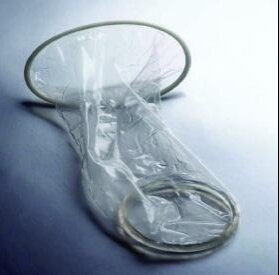
    THE FEMALE CONDOM


    The African Institute has launched the National Condom Week in Nottingham on Monday 21st May and will run till 28th May. 2000 condoms were packed and mass distribution is underway from street, community businesses and live Radio media interview for condoms and lubs collection.


    There is an urgent need to expand access to proven prevention methods, including clean needles, female and male condoms, risk reduction counselling, treatment of sexually 
    transmitted infections, and other strategies. 
                                                                                                  
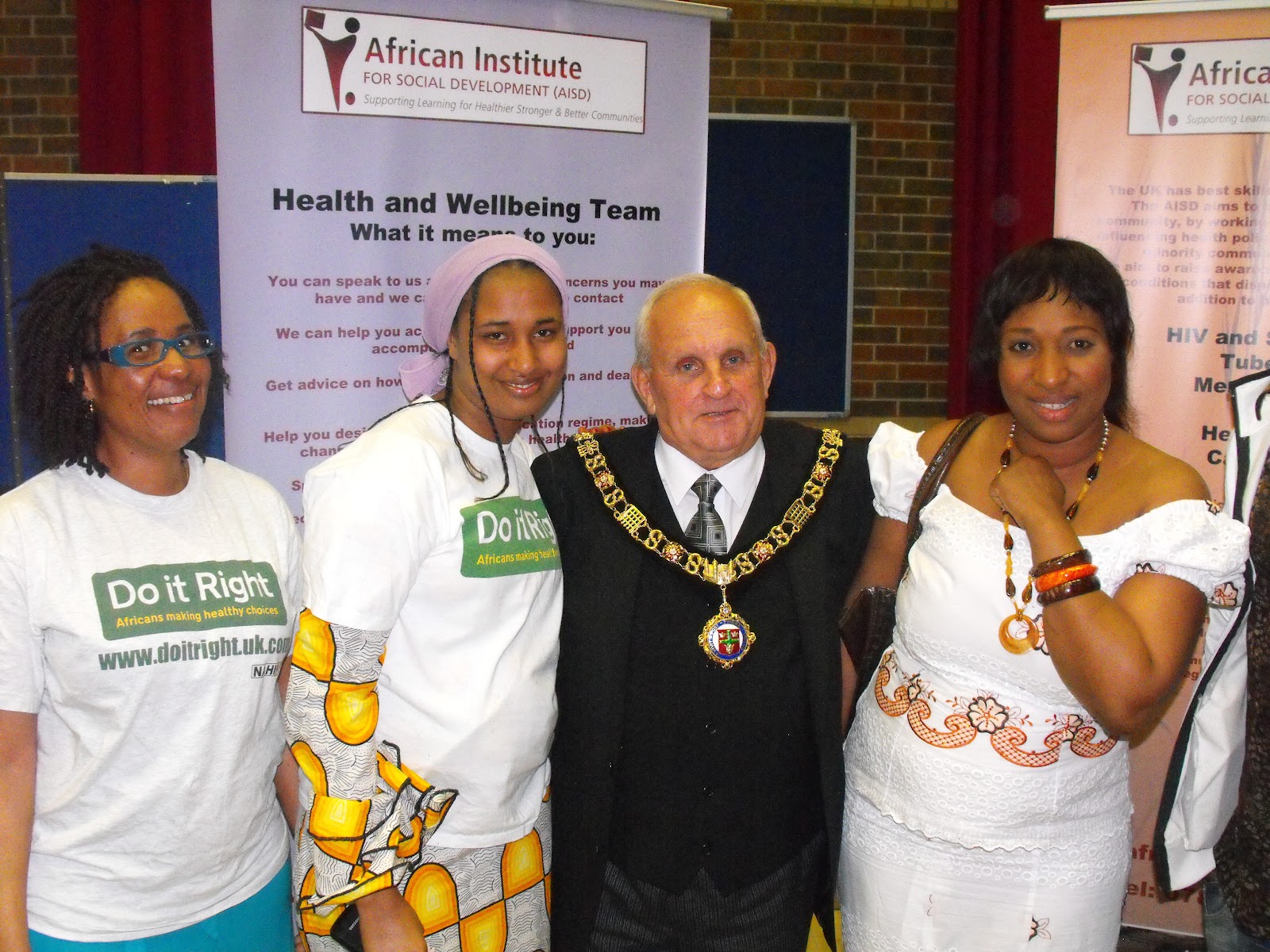
      Below photo of Cllr Leon Unczur Sheriff of Nottigham then and current Lord Mayor
    This year the AISD has made a focus on FEMALE CONDOM or FEMIDOM. "We want women to be in charge of their sexual health and share control, and pleasure with their male partners" said Amdani Juma, the Institute Director. He added that "each prevention technology present possibility of new option for individuals to help reduce their risk of HIV. no one of the interventions on their own can end the epidemic

    The femidoms have improved greatly over years and we now have "Softer and more Sensual."

    Imagine a tool that can be worn by a woman during sex, that protects against pregnancy, HIV, and other STIs. In case that isn’t enough, it also enhances pleasure for both her and her partner. It is inserted into the vagina before sex, and part of it stays outside of the woman’s body, where it increases the sensation of sex by rubbing against her labia and clitoris. 
    It is strong, soft, and transparent, and is excellent at transferring heat. Her partner likes that it doesn’t constrict his penis, making sex feel more natural. And since it doesn’t rely on an erection, it can be inserted hours before sex, getting her in the mood and maintaining the flow of sex. What is this amazing thing? It’s a female condom!
    The female condom has been on the market for 20 years and recently new innovations have emerged. The traditional female condom (FC2) – which has an inner and an outer ring – is made of synthetic latex, eliminating the noise that some people found distracting. There are also other female condoms available and under development, including a latex condom that has a firm sponge in the place of the inner ring, and another, Woman’s Condom, that can be inserted like a tampon, expanding during intercourse. 
    demand for female condoms grows, we expect to see even more innovation in the market, because as we all know, variety is the spice of life!
    Female condoms have several advantages. Women are in control when they use them. The use of male condoms often has to be negotiated over and over again and relies on the cooperation of men. Female condoms have to be negotiated only once. They can be inserted several hours before the sexual act takes place, so foreplay does not need to be interrupted.
    Studies report a high satisfaction rate by both women and men who have used the female condom. Originally, the demand came mostly from women, but we see the number of male consumers increasing. In sum, the female condom is a commodity for safety, but also a pleasurable tool that should be accessible for all!


    Prevention Technologies

    Vaccines: An AIDS vaccine is an experimental strategy that aims to teach the body's immune system 
    how to fight HIV to reduce the risk of infection or to reduce viral load in those who get the vaccine and 
    go on to become infected. All of the candidate vaccines being studied are experimental; there are no 
    effective AIDS vaccines available today. 
    Pre-Exposure Prophylaxis (PrEP): PrEP is an experimental approach that uses antiretroviral 
    medications (ARVs) to reduce the risk of HIV infection in HIV-negative people. During a study of gay 
    men, transgender women and other men who have sex with men, a daily pill reduced the risk of HIV 
    by 44%. Additional studies are ongoing in other populations. PrEP is not yet recommended for use. 
    Note: PrEP must not be confused with post-exposure prophylaxis (PEP), which is available in the UK 
    following exposure to HIV. 

    Microbicides: The term microbicide refers to various strategies being tested that may reduce the risk 
    of HIV transmission during sex. These include creams, gels, and suppositories that could be used 
    vaginally or rectally. The large majority of microbicide candidates in testing today are formulated with 
    antiretroviral (ARV) drugs. There is now proof of concept that a topical gel can reduce women’s risk of 
    acquiring HIV during vaginal sex. However, more research is needed before such gels are available.

    Male circumcision: Medical male circumcision (MMC) is the removal of all or part of the foreskin of 
    the penis by a trained health professional. The term medical male circumcision differentiates 
    circumcision that is performed by a trained health professional from traditional circumcision, which is 
    performed as part of a religious ritual or cultural rite of passage. Adult medical male circumcision can 
    reduce men’s acquisition of HIV by up to 65% when they have vaginal intercourse. However, there is 
    no evidence that it also protects the female partners of men who are HIV positive and it remains 
    unclear whether circumcision could have an impact on HIV transmission among gay men and other 
    men who have sex with men. 

    Treatment as prevention: Treatment as prevention is a term describing the use of antiretroviral 
    drugs that are used to reduce the risk of passing HIV to others. The strategy would function as a 
    secondary benefit of antiretroviral treatment after its primary purpose of improving an individual’s 
    health. The rationale for this approach is that ARVs reduce viral load. Higher viral loads have been 
    linked to increased risk of passing HIV to sexual partners. 
    Treatment as prevention is an emerging area and there are different terms and phrases used to 
    describe this approach, including "test and treat" and "testing and linkage to care plus" which 
    recognizes that voluntary HIV testing and diagnosis is the first step to accessing care.

    Sperm Washing: Sperm washing is a technique developed for couples who wish to conceive a child, 
    where the male partner is living with HIV and the female partner is not. By isolating sperm from any 
    elements in semen which may contain HIV, the risk of transmission of HIV to the female partner and 
    subsequently her child is greatly reduced. A variety of assisted reproduction techniques can be used 
    to fertilise the female partner with the washed sperm. Numerous observational studies have shown 
    that sperm washing has not resulted in any seroconversions when correctly performed, and it is 
    currently considered the safest method for serodiscordant couples wishing to conceive a child 
    together. 
    Sperm washing is available in the UK, however its availability is limited to two clinics and the dramatic 
    variability of funding available throughout the country coupled with significant costs is a barrier for 
    many couples. 

    End of report.

    For More information and comments
    Visit us at : www.africaninstitute.org.uk and Call or Text us at: +44 (0)7834459076
    Campaign with us at www.idoitright.co.uk

    Wednesday, 29 February 2012

    HIV Treatment to be free for Undocumented Migrants and non-UK Citizens


    In this report: 
    The African Institute for Social Development (AISD) welcome the Department of Health efforts to make HIV treatment free for all in England, like in Scotland and Wales, this will encourage Northern Ireland to allow HIV free treatment to all who needs it. AISD colleagues and other HIV advocates led by National AIDS Trust finally see a successful human right cause to its fruition. 
    Mr Amdani Juma, the AISD Director said: "The DoH efforts to make HIV treatment free at the point of need in England will assist many Africans and other migrants fight onward HIV infection and will contribute to good health and happier life for Africans living and working in England"; contact Mr Juma at amdani@africaninstitute.org.uk. 
    Roger Pebody
    Published: 28 February 2012
    The Department of Health has announced that it will soon make HIV treatment free for all who need it, regardless of citizenship or immigration status. While the change may be politically controversial, ministers are justifying it on the grounds of public health.
    For a number of years, treatment of other sexually transmitted infections, tuberculosis and malaria has been free to all, regardless of normal rules on entitlement to NHS services. HIV treatment will now be provided in the same way, as long as the person seeking treatment has been in the UK for at least six months.
    This is a significant victory for HIV advocates, led by the National AIDS Trust, which has persuaded government officials that charging for HIV care discourages migrants from testing for HIV, leads to undiagnosed individuals unwittingly passing their infection on, and means that when people are eventually diagnosed, the treatment they need is unusually expensive.
    Citing the HPTN 052 study, the chief medical officer, Professor Dame Sally Davies, noted that effective HIV treatment reduces the risk of transmission by 96%.
    However, immigration is a sensitive political issue, and this has led successive governments to tighten restrictions on free-of-charge NHS treatment for people subject to immigration control.
    While individuals who are in the process of claiming asylum and people who have refugee status are entitled to NHS care, this is not generally the case for people who have been refused asylum, people who have overstayed a visa or illegal entrants. Moreover, people who have a visa for studies or for a short visit are not usually entitled to healthcare.
    Nonetheless, the rules do allow doctors discretion in some areas and there are no charges for treatment of a number of serious communicable diseases.  
    Last year, a select committee of the House of Lords, chaired by the former Conservative health minister Lord Fowler, recommended that anyone who is resident in England should have access to free HIV treatment if they need it.
    As part of the Lords debate on the highly controversial Health and Social Care Bill, Lord Fowler introduced an amendment to that effect. In response, government ministers yesterday said that Fowler’s amendment was unnecessary as the government would itself introduce changes to theCharges to Overseas Visitors Regulations in the next few months which would have the same effect as his amendment.
    Anne Milton, the public health minister and a former nurse, said: “This measure will protect the public and brings HIV treatment into line with all other infectious diseases. Treating people with HIV means they are very unlikely to pass the infection on to others.” However she added: “Tough guidance will ensure this measure is not abused.”
    The government believes that early diagnosis of people with HIV will ultimately help cut costs.
    Professor Jane Anderson, chair of the British HIV Association said: “I am delighted that Lord Fowler has finally won the argument on this point. It's a decision that will certainly save lives and improve the quality of life of many who were previously shut out from appropriate treatment.”
    Deborah Jack, chief executive of the National AIDS Trust (NAT), commented: "NAT has been campaigning for HIV treatment to be free for all those who need it in England for many years - and we regard the Government's commitment on this to be a huge achievement. Free HIV treatment for all is a victory for public health and for the NHS.”
    The new rules are likely to come into force in October – until then, charges may be made for treatment. The changes will initially apply only to the regulations in England. However, the Welsh and Scottish health services have rarely charged individuals for HIV treatment in the past. It’s not clear whether Northern Ireland will follow suit.
    End of report
    African Institute for Social Development(AISD)
    www.africaninstitute.org.uk


    Thursday, 22 September 2011

    Chronic Diseases must learn from HIV/AIDS

    African Institute for Social Development(AISD) support and welcome the global intitiative to integrate Health in HIV activities. AISD Director, Mr Amdani Juma, who firmly believes in integrating health in HIV has started to get support from both national and international voices. in our news update

     September 2011 - Health officials in sub-Saharan Africa are finally focusing on non-communicable diseases (NCDs) such as cancer, diabetes and chronic lung disease, having spent much of the past decade concentrating on HIV/AIDS and malaria.


    The growth of NCDs in developing countries has gone almost unnoticed, having been largely perceived as a problem affecting affluent countries. But NCDs have overtaken infectious diseases as the leading cause of death worldwide, with nearly 80 percent of these deaths occurring in low- and middle-income countries, according to the World Health Organization (WHO).

    The UN High-level Meeting on NCDs on 19-20 September sought to identify concrete actions to tackle the issue. The last time the UN held such a meeting on a disease was 10 years ago for HIV/AIDS and the similarities do not end there.

    Countries grappling with HIV prevalence are now faced with rising epidemics of chronic diseases. UNAIDS has warned that diabetes cases, for example, will rise by 50 percent globally and by 100 percent in sub-Saharan Africa between 2010 and 2030.

    As more HIV-positive people access antiretrovirals and live longer, their risks of contracting illnesses such as diabetes and heart disease are growing. In South Africa, the fourth most common cause of death in people living with HIV is hypertension, while diabetes comes in at number six.

    Great resource
    According to Miriam Rabkin, director for health systems strategies at Columbia University's International Center for AIDS Care and Treatment Programs (ICAP), HIV and NCDs are often seen as completely separate challenges.

    "In fact, HIV and NCD departments are often siloed and separated at every level of the health system, from the health facility to the Ministry of Health, up to the WHO. But from a health systems perspective, HIV, a chronic communicable disease, and NCDs, chronic non-communicable diseases, actually have a great deal in common and it is important for us to learn from each other," she told IRIN/PlusNews.


    "In many countries, HIV programmes are actually the first large-scale chronic disease programme, and can be a great resource... it's important to avoid 'reinventing the wheel'," Rabkin noted.


    The responses to HIV and NCDs can take similar approaches, including appointment and medication reminders, transport support, and counselling to support adherence and ongoing behaviour change
     
    In 2010, Columbia University and the Ethiopian Diabetes Association conducted a study looking at whether the tools and approaches used for HIV could be applied to the care of adults with diabetes. "It was a small study, but we did show that the quality of care for diabetes improved quite rapidly over a period of six months," said Rabkin.


    However, Catherine Hankins, scientific adviser for UNAIDS, suggested more could be done to integrate the treatment of chronic diseases into the health sector. "Pregnant women who get gestational diabetes - what happens to them? You may have an antenatal system that has worked really well now for HIV. You know to put them on antiretroviral treatment, but then maybe there is no referral set-up for diabetes because there is no diabetes care," Hankins told IRIN/PlusNews on the sidelines of the recent AIDS Vaccine conference.

    Countries are slowly beginning to combine HIV services with chronic disease care. According to Shanthi Mendis, coordinator of WHO's Chronic Disease Prevention and Management, HIV services and cervical cancer screening have been integrated in some settings. Kenya's Ministry of Health and the Kenya Cardiac Association have begun to screen people tested for HIV for hypertension, and to refer them to the appropriate care and treatment services.

    Funding gap

    Funding, or lack thereof, however, remains a problem for both HIV/AIDS and NCDs - more so for chronic diseases that lack the high-profile activist campaigns and celebrities found in the AIDS sector.

    The US Centre for Global Development estimates that less than 3 percent (US$503 million) of the almost $22 billion spent in 2007 on global development assistance for health was spent on NCDs.

    "We can be efficient and creative; we can avoid redundancies and build on the lessons of HIV scale-up. But the idea that because we have invested so heavily in HIV we can somehow treat NCDs for free is a dangerous illusion," Rabkin cautioned.

    Mendis admitted that social and community mobilization for chronic diseases will "require more advocacy and will take more time", unlike AIDS, which had had a "devastating impact" on families and societies and galvanized communities quicker. "NCDs impact on families but... the impact is more prolonged... People with HIV provide a powerful image of sickness. NCDs, on the other hand, are silent killers and most of the time do not even cause symptoms."
     
    You can also find Foreign Affairs .
     
    The African Institute for Social Development (AISD)  started , since 1999,to integrate Health in HIV activities and have been inviting local NHS workers to work in collaboration to promote general health and prevent ill health in the community as African are disproportionately affected by Mental Health conditions, TB, Diabetes, Cancers, Heart Diseases etc... these are due to many factors affecting a newly arriving community  including poverty, late presentation and lack of information and advice of how to prevent diseases and keep a healthy live. 
     
    African Health Policy Network(AHPN) formaly African HIV Policy Network once our HIV umbrella have now become our Health umbrella and this move have been very well received by AISD both members and clients. AISD can continue to get support both on research and policy from the AHPN and can continue to be an ecceftive regional hub feeding to the national and international work
     
    end of news update      


    Monday, 18 April 2011

    Better Hope to have healthy children with HIV

    First UK use of PrEP for couples hoping to have a Child African Institute AISD looks into the benefits of PrEP Roger Pebody Published: April 2011

    Pre-exposure prophylaxis is starting to be used in the UK, to help HIV-positive men and their HIV-negative female partners have children together, Yvonne Gilleece told the British HIV Association (BHIVA) conference in Bournemouth last week. Only a handful of couples have used the procedure so far, but there have been no HIV transmissions. Also this month, other research has shown how couples wishing to conceive value the ‘normality’ that a pregnancy signifies, but find that a medical intervention like sperm washing undermines this normality. When antiretroviral treatment reduces a partner’s viral load to an undetectable level this can enable couples to feel more confident about conceiving through ‘real sex’.


    Pre-exposure prophylaxis


    Pre-exposure prophylaxis (PrEP) is the use of antiretroviral drugs by HIV-negative people to help prevent infection. Last year an international trial showed that daily PrEP substantially reduced infections in men who have sex with men. European clinicians have previously described using PrEP as an additional tool, alongside HIV treatment that reduces the HIV-positive partner’s infectiousness, to allow heterosexual couples to have timed intercourse in order to achieve a pregnancy, with a low risk of HIV transmission. At the BHIVA conference, Dr Gilleece outlined the pre-conception services provided by the Royal Sussex County Hospital in Brighton and Birmingham Heartlands Hospital. These clinics work with both local couples and those who have been referred from other hospitals. Couples require extensive information, discussion and counselling before proceeding. It is important to explore other options such as sperm washing and adoption, as well as to fully explain the available data on HIV treatment and infectiousness. Moreover, couples need to have a ‘no blame’ attitude and to have considered the worst-case scenario. Because this use of antiretroviral drugs is unlicensed and a risk of HIV transmission remains, couples must provide written consent before proceeding. Gilleece noted some of the reasons couples choose to use pre-exposure prophylaxis - they may be unable to obtain NHS funding for sperm washing (particularly if they already have a child) and unable to pay for sperm washing privately. Sperm washing requires travel to London and disruptive procedures, whereas when using PrEP, conception may feel more natural. However there are a number of situations where the use of PrEP would be inappropriate – when a partner is co-infected with hepatitis, when fertility interventions are required, when HIV viral load is detectable in blood or semen, or when a partner is very anxious about HIV transmission. The HIV-negative partner is advised to take one or two doses of tenofovir or Truvada (tenofovir and FTC combined in one pill) between 24 and 36 hours before sex, and then another dose one to two hours afterwards. Couples are advised to limit unprotected sex to the days of the month during ovulation (and taught how to do so). Only five couples have gone through the programme so far. There have been four pregnancies, resulting in one live birth, one pregnancy that is still ongoing and two miscarriages. One couple stopped using PrEP when the male partner had a series of viral load blips (all men had an undetectable viral load on entering the programme). Couples had unprotected sex an average of three times before pregnancy was achieved (minimum one, maximum five). These numbers are far too small to give any reliable data on safety, but there have been no HIV transmissions. Gilleece said that these early data – the first from the UK – suggests that the approach is a safe and effective way of reducing risk. Demand for it is likely to increase, but current PrEP trials are not exploring this approach. She said that other UK clinics should only use PrEP in collaboration with more experienced centres, and that data from across the UK should be gathered collectively in order to assess the safety and efficacy of PrEP on a larger scale.


    Assessing risk


    A separate study of men and women in sero-different couples (where one person has HIV and the other does not) has shed light on how risks and interventions are weighed up when there is a desire to have a child. Carmel Kelly conducted in-depth, qualitative interviews with six women and four men living in Northern Ireland. Some of the participants were HIV-positive and others were HIV-negative, but each had a partner of a different HIV status. The participants were born variously in Ireland, Africa and Eastern Europe. For each interviewee, decisions about having children could no longer be taken for granted or made without discussion with clinicians. Biomedical understandings of risk and possibilities became central to their plans for the future. In fact some participants had previously assumed that it would now be impossible to have a child, and dialogue with HIV clinicians helped many understand and believe that having a baby in the context of HIV was relatively safe and normal. However these feelings could sometimes be challenged by distressing encounters with fertility specialists and other non-HIV clinicians who questioned a person’s aspiration to have a child. “He [doctor] said, ‘I have to think about the protection for my nurses and the doctors and you also have to think about the protection of your wife’. Now he made me feel that I was a threat to the entire medical staff and my family. And I had gone there for help. I didn’t go there to be told, as if I was a divisive enemy or weapon.” Participants talked about how having HIV had affected their sex lives and about wanting things to be as ‘normal’ as possible. Several of the men put a particular value on unprotected sex, which was felt to be ‘real sex’. “I am here trying to cope with treatment, not telling people my diagnosis and now I can’t even have my wife. For how long? A night? Two months? A year? Two years? No. Forever. From now onwards sex is out of the question. I mean real sex. Now that is another prison. Another sentence.” The women were more likely to find condoms acceptable. They were more likely to enjoy sex when they knew they were protecting their partner from HIV. For several interviewees, the decision to have a child with their partner was a key step in their relationship and was a sign of normality for each other and for the outside world. One HIV-negative woman explained how her pregnancy would provide a distraction to community members who had suspicions about her partner’s HIV status. Another interviewee struggled to find the English to explain how fundamental the desire to have a child was to his sense of self. “Since then I have had that idea of having a baby because I consider myself a human being. I was someone who (my English find it hard) to procreate. When we are healthy, when we are born and grow up we have that idea to procreate because we were procreated... But when I became HIV positive I think it is finished for me. I can’t have anymore. Having one woman, one wife and having healthy kids. These things affect me very much. When I think about it I think I am not useful anymore for people... I take the risk to do it because I want to feel as a man.” But the same man and his wife were uncomfortable with the idea of sperm washing: “I talk to the doctors. We discuss, they told me, they showed me the way I could have a baby without harming the baby is [sperm] washing... It is not how people want it. They want to have a baby a normal way, you know. Like my wife, when we discuss, she said, ‘no’, she can’t do this. It is better not having a baby. She born, when she born, she didn’t born that way. All babies she going to have in the future she want to have them the way she was born, normal way, you know.” Sperm washing involves the man’s sperm being treated in a laboratory before it is artificially inseminated in his partner. The high cost of the procedure means that there can be wrangles with health bodies over payments and availability. Each attempt at a conception (of which there may be several) requires a trip to London. Another man had considered sperm washing but expressed his preference for a pregnancy “the normal way, without any of the interventions”. It is notable that the reduction of viral load through antiretroviral treatment felt normal to him and was not perceived to be an extra intervention. “You know they had suggested the various ways of how we could do it and we sat down and we discussed it and thought, ah well, seeing that I have been able to control the virus, and maintaining the viral load we will just do it the normal way, without any of the interventions.” A number of participants had had unprotected sex on numerous occasions (sometimes including a period before HIV had been diagnosed), and this informed a faith or confidence they had in the possibility of having sexual relations without transmission occurring. This faith had been augmented by a growing awareness of the relevance of medication and viral load to transmission risks. One HIV-negative woman explained how the transmission risk came to feel unexceptional to her. “The second time [second pregnancy] it had become quite normal. You know it was not a big deal... You know, having unprotected sex with someone who is HIV-positive to become pregnant. To another person would be, like ‘what, you have done what, are you crazy?’ you know whereas to us now it’s like, you know, yeah, if you want to have another one.” However her confidence in a low transmission risk applied only to times when she was trying for a baby; unprotected sex was not an option at other times. Concluding her study, Carmel Kelly says that her findings demonstrate how personal priorities and meanings are central to the negotiation of risk in sexual relationships. Biomedical understandings of risk (including those based on viral load) are balanced against a broader set of expectations, meanings and desires.


    References


    Gilleece Y et al. Pre-exposure prophylaxis exposure for conception as a risk-reduction strategy in HIV positive men and HIV negative women in the UK. 17th annual British HIV Association conference, Bournemouth, abstract O27, 2011.


    Amdani Juma the Director of AISD would like to extend our thanks to NAM and all our NAHIP partners for the valuable work we all provide nationally and those who read us internationally.


    Please contact us at africaninstitute@live.co.uk, visit us http://www.africaninstitute.org.uk/, and http://www.doitright.uk.com/ text us on 07834459076 or call us free on 0800 0967 500 for HIV and Sexual Health information and advice it doesn't matter whether you speak English, French, Arabic, Swahili, Shona, Luganda, Lingala, Portiguese etc... we are here happy to help and we are always recruiting more volunteers for healthier and better communities